

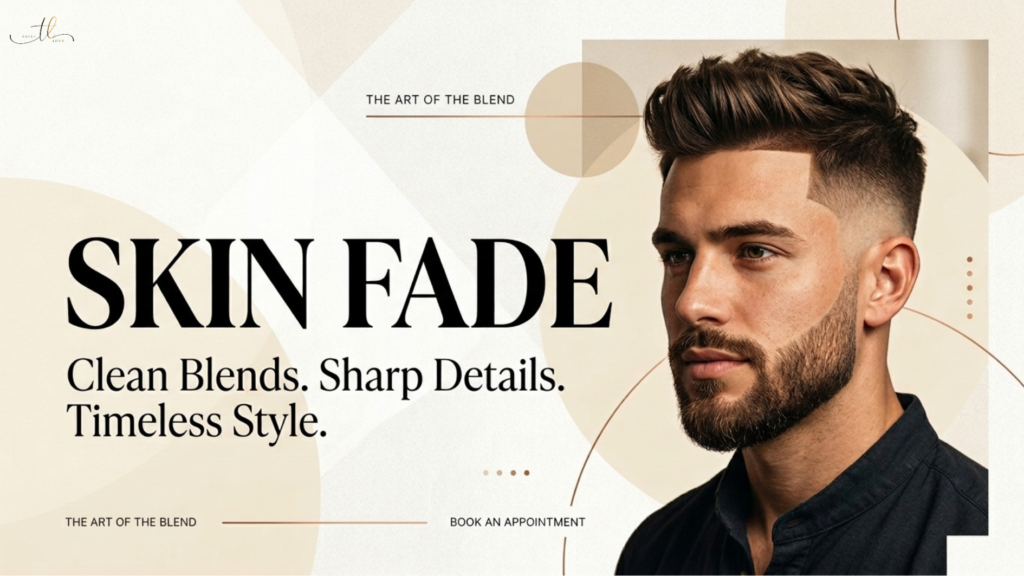
A skin fade haircut is one of the most popular choices for men who want a clean, stylish, and modern appearance. This haircut gradually blends longer hair into bare skin, creating a smooth transition around the sides and back. Whether you prefer a subtle low fade or a bold high fade, there are plenty of styles to explore.
Choosing the right skin fade depends on your face shape, hair texture, beard style, and daily grooming routine. Some hairstyles look sharp and professional, while others create a relaxed, textured appearance. Understanding these differences helps you choose a haircut that matches your personality and lifestyle.
This guide covers the best skin fade styles, different fade types, beard combinations, blending techniques, and practical barber tips. You’ll also learn how to maintain your haircut and avoid common styling mistakes.
What Is a Skin Fade Haircut?
A skin fade haircut gradually reduces hair length along the sides and back until it reaches bare skin. Barbers use clippers, trimmers, and sometimes razors to create a smooth fade transition between different lengths. The result is a clean and sharp haircut that highlights the hairstyle on top while keeping the sides neatly blended.
Unlike traditional haircuts, a skin fade creates noticeable contrast without leaving harsh lines. The fade can begin near your ears, around your temples, or higher toward your crown. Its placement determines how much scalp becomes visible and how dramatic the finished haircut appears.
A skin fade works with various hairstyles, including buzz cuts, textured crops, pompadours, and curly tops. It also complements different beard lengths, making it a flexible choice for modern grooming.
The main advantage is its adaptability. You can choose a subtle, professional appearance or a bold haircut with strong contrast. However, because the shortest sections expose your scalp, regrowth becomes noticeable relatively quickly.
Different Types of Skin Fade Haircuts
Different skin fade haircut styles offer unique appearances depending on their height and shape. Understanding these variations helps you select a haircut that matches your preferences, hair texture, and desired appearance.
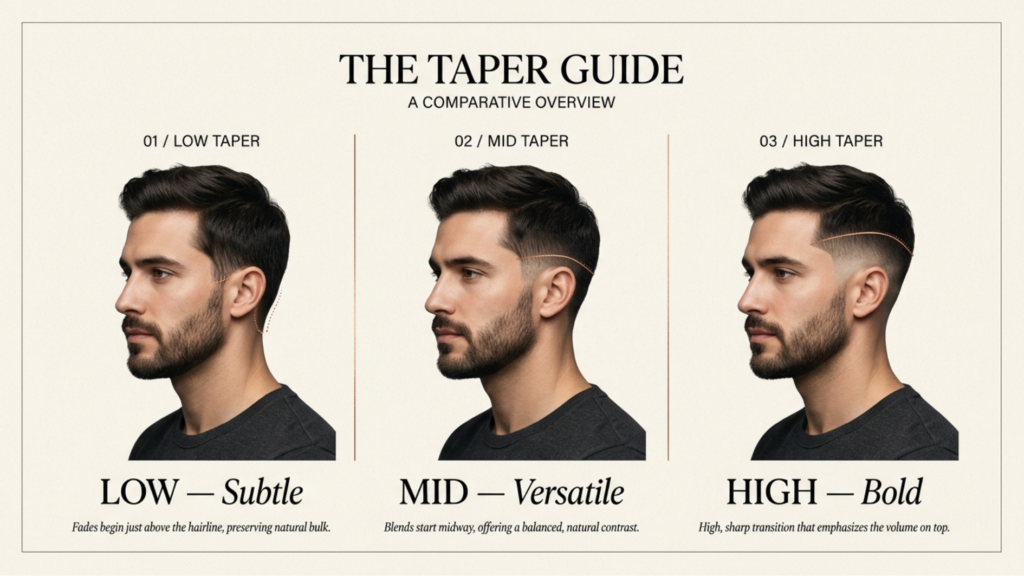
Low Skin Fade: A low skin fade begins just above your ears and follows the lower hairline. It keeps more hair around the upper sides, creating a softer appearance. This style works well with short crops, side parts, and neatly trimmed beards. It’s ideal when you want a clean haircut without exposing too much scalp.
Mid Skin Fade: A mid skin fade starts around the middle of your head, often near the temples. It creates balanced contrast between the longer top and shorter sides. This versatile haircut complements crew cuts, textured hairstyles, and medium-length hair. It suits men who prefer something sharper than a low fade without choosing an extremely high transition.
High Skin Fade: A high skin fade begins near the upper sides, leaving a larger section of exposed scalp. It creates strong contrast and draws attention toward the hairstyle on top. This bold option pairs well with buzz cuts and textured crops. However, hair growth becomes noticeable sooner across the larger faded area.
Bald Skin Fade: A bald skin fade is another name for a skin fade because both finish at bare skin. Your barber may use clippers, a foil shaver, or a razor to achieve the desired closeness. This finish can be combined with low, mid, or high placement. It offers a particularly crisp appearance but requires careful maintenance.
Drop Skin Fade: A drop skin fade curves downward behind the ears instead of following a straight horizontal line. This shape creates a rounded silhouette that complements natural head contours. It works particularly well with curly tops, textured hairstyles, and longer crown sections.
Burst Skin Fade: A burst skin fade creates a semicircular transition around your ears while often preserving more length toward the back. It pairs naturally with modern mullets, mohawks, and textured hairstyles. This distinctive cut suits men who want a more expressive appearance.
| Fade Type | Appearance | Best For |
| Low skin fade | Subtle and neat | Classic hairstyles |
| Mid skin fade | Balanced contrast | Everyday versatility |
| High skin fade | Bold and defined | Short, modern cuts |
| Bald skin fade | Very close finish | Sharp outlines |
| Drop skin fade | Curved transition | Textured hairstyles |
| Burst skin fade | Rounded around ears | Mullets and mohawks |
Best Skin Fade Haircut Styles for Men
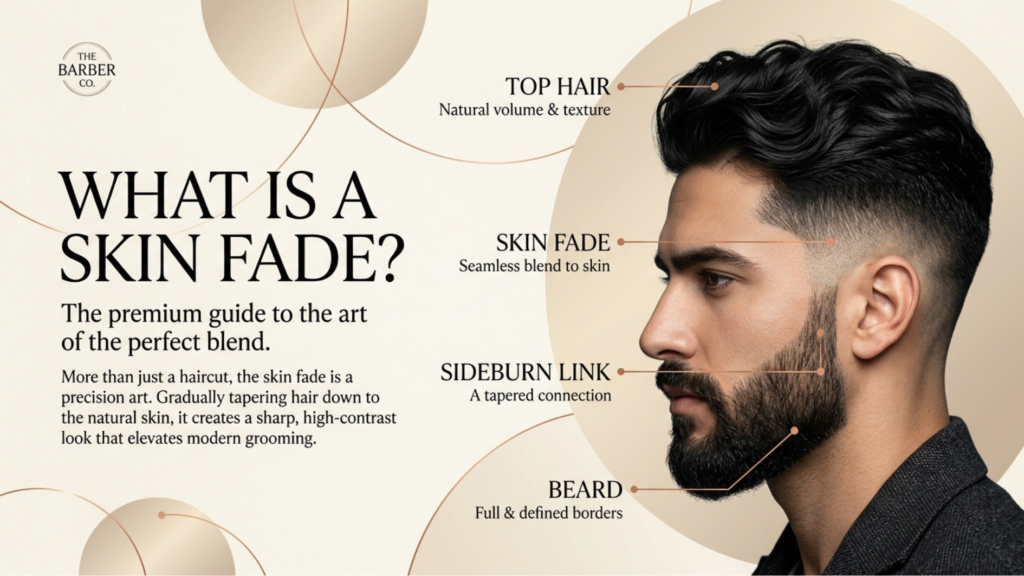
The best skin fade hairstyles for men combine a clean fade with a suitable top hairstyle. Your hair length, texture, and styling preferences determine which combination works best. Short hairstyles generally require less daily effort, while longer styles offer more flexibility.
Buzz Cut Skin Fade: A buzz cut skin fade combines very short hair on top with closely blended sides. It requires minimal daily styling and suits active lifestyles. The short top creates a balanced appearance, although regular trims help preserve its precise shape.
Textured Crop Skin Fade: A textured crop skin fade features short, layered hair with a natural, slightly messy finish. The fade removes bulk around the sides while the textured top adds movement. A small amount of matte clay can improve definition without making your hair appear stiff.
Curly Hair Skin Fade: A curly hair skin fade highlights natural curls by keeping the sides short. The contrast emphasizes texture and reduces unwanted bulk. Ask your barber to consider curl shrinkage before trimming the top. Lightweight curl cream helps maintain definition.
Pompadour Skin Fade: A pompadour skin fade combines a lifted, swept-back top with sharply faded sides. It creates a polished hairstyle suitable for formal occasions. You’ll usually need a blow dryer and styling product to maintain the volume.
Crew Cut Skin Fade: A crew cut skin fade keeps the top short, often leaving slightly more length near the forehead. It provides a practical, professional appearance with minimal styling requirements. This combination suits men who prefer a classic haircut with a modern finish.
Slick Back Skin Fade: A slick back skin fade features longer hair brushed backward over closely faded sides. It creates a structured appearance that works well with straight or wavy hair. Pomade provides shine, while matte paste creates a more natural finish.
Comb Over Skin Fade: A comb over skin fade combines a side-swept top with smoothly blended sides. It offers a tidy appearance suitable for work and casual settings. You can maintain a soft natural part or request a sharper line for additional definition.
Skin Fade With Beard: Best Styles and Combinations
A skin fade with beard creates a coordinated appearance between your haircut and facial hair. The sideburn connection determines whether the transition looks continuous or deliberately separated. Beard density, jawline shape, and fade height influence the finished style.
Low Skin Fade With Short Beard: This combination offers a balanced appearance with minimal contrast. A short boxed beard adds structure around your jaw, while the low fade keeps the upper sides fuller. It works well for professional and everyday hairstyles.
Mid Skin Fade With Full Beard: A mid fade paired with a full beard creates stronger contrast. Proper sideburn blending connects the short sides with the thicker facial hair. Your barber should preserve enough beard density to maintain a natural shape.
High Skin Fade With Stubble: This combination creates a sharp, minimalist appearance. The high fade exposes more scalp, while the stubble beard style adds subtle facial definition. It pairs particularly well with buzz cuts and textured crops.
Skin Fade With Long Beard: A long beard creates dramatic contrast against closely faded sides. Careful beard neckline shaping and cheekline maintenance keep the overall appearance balanced. Avoid removing too much beard volume during blending.
Connected vs Disconnected Beard: A connected fade gradually blends the sideburn into facial hair, creating a softer transition. A disconnected fade leaves a deliberate gap, producing stronger contrast. Both styles can work well, depending on your beard growth and personal preference.
A successful beard combination should complement your natural facial proportions. For example, a fuller beard can add width around a narrow jaw, while shorter facial hair creates a lighter appearance.
How to Choose the Best Skin Fade for Your Face Shape
Your face shape can influence how a skin fade looks, but it shouldn’t completely determine your haircut. Hair density, growth direction, and personal preferences are equally important. The goal is to choose a style that balances your features while remaining comfortable to maintain.
For example, higher fades may make the sides appear narrower, while longer hairstyles add visual height. Understanding these effects helps you choose a balanced appearance.
| Face Shape | Suggested Skin Fade | Styling Advice |
| Round | Mid or high fade | Add moderate height on top |
| Oval | Low, mid, or high | Choose according to preference |
| Square | Low or mid fade | Complement the jawline |
| Long | Low or mid fade | Avoid excessive top height |
A skin fade for round face shapes often works well with a textured top because it creates additional vertical definition. Oval faces accommodate many styles, while square faces can benefit from balanced side volume.
Men with longer faces may prefer lower fades that preserve some width around the temples. Extremely tall hairstyles can make the face appear even longer, so moderate top volume often creates better balance.
Your hair texture and density also matter. Straight hair may reveal blending lines more clearly, while curly hair requires attention to shrinkage. A skin fade for thinning hair can reduce visual contrast between fuller sides and a thinner top, although results depend on your hair pattern.
How Do Barbers Blend a Skin Fade Into a Beard?
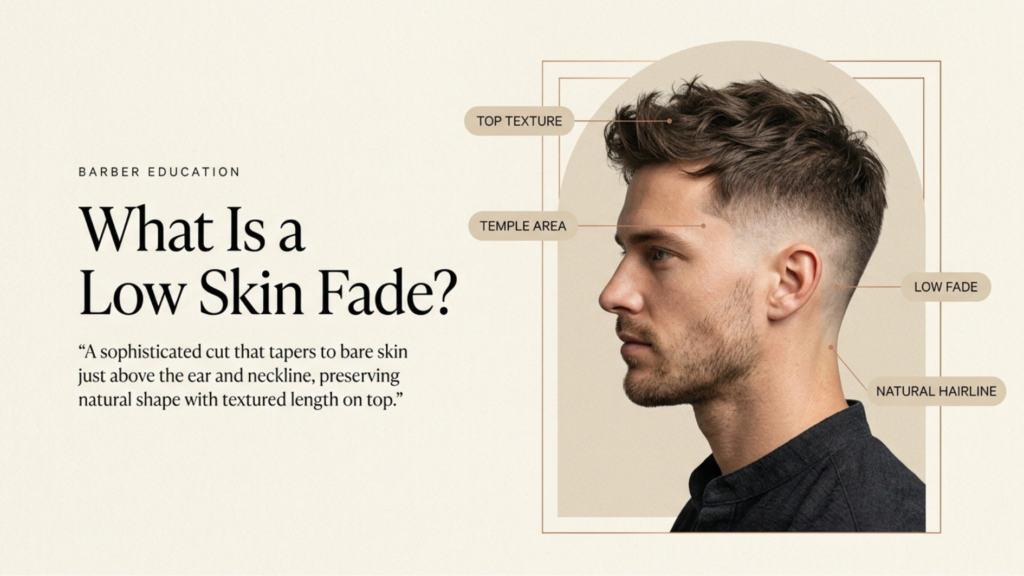
Professional skin fade beard blending creates a gradual connection between the haircut and facial hair. The barber establishes the fade first, then adjusts the sideburn length to match the beard. A smooth transition requires controlled clipper movements and careful attention to beard density.
A typical blending process involves:
- Choose the fade height: Decide whether the haircut will have a low, mid, or high transition.
- Create the skin fade: Gradually increase hair length from bare skin toward the top.
- Establish the sideburn: Identify where the haircut meets the beard.
- Blend downward: Increase length gradually toward the fuller facial hair.
- Shape the beard: Refine the cheekline, jawline, and neckline.
- Check symmetry: Compare both sides and correct visible blending lines.
Barbers use different clipper guard sizes to control the transition. Common guards include #1, #2, and #3, although exact lengths vary by equipment. Adjustable blades help create smaller steps between these lengths.
The most common mistakes include uneven sideburns, harsh transition lines, and excessive beard trimming. Good professional barber techniques preserve natural growth patterns while creating a clean, balanced finish.
If your beard grows unevenly near the ears, a softer connection may look better than an extremely sharp blend. Discuss these details before your barber starts cutting.
Skin Fade vs Taper Fade: What’s the Difference?
The skin fade vs taper fade comparison is important because both haircuts use gradual length changes. However, they differ in how much hair they remove and where the transition occurs.
A skin fade exposes the scalp across a selected section of the sides and back. A traditional taper fade generally keeps more hair and concentrates the shortening around the sideburns and neckline.
| Feature | Skin Fade | Taper Fade |
| Shortest length | Bare skin | Usually short hair, sometimes skin |
| Overall contrast | Stronger | Softer |
| Hair coverage | More scalp exposed | More hair retained |
| Maintenance | More noticeable regrowth | Often easier to grow out |
| Appearance | Bold and defined | Subtle and classic |
A zero fade usually ends at a clipper’s zero setting, leaving very short stubble. A skin fade may go closer using a foil shaver or razor. However, barber terminology varies, so confirm the finish before cutting.
Choose a skin fade if you enjoy sharp contrast and frequent touch-ups. A taper fade may suit you better when you prefer a softer appearance or less demanding maintenance.
Both haircuts work with many hairstyles. Your decision should depend on your preferred appearance, natural hair growth, and how often you visit the barbershop.
How to Ask Your Barber for the Perfect Skin Fade
Clear communication helps you achieve the haircut you actually want. Simply asking for a fade doesn’t explain its height, top length, or finishing details. A short conversation before cutting can prevent misunderstandings.
Start by showing your barber reference photos from the front, sides, and back. Choose images featuring hair texture similar to yours whenever possible. This helps your barber understand your preferred proportions and blending style.
You can say:
“I’d like a mid skin fade with a textured top. Keep enough length to style the front, and blend the sideburns naturally into my short beard.”
This request explains the fade height, hairstyle, and beard connection without relying on confusing technical terms.
Before cutting begins, discuss your natural hairline, crown, and preferred skin-close haircut finish. If you have sensitive skin, ask whether a clipper-close finish would be more comfortable than a razor-close shave.
A good barber also checks the fade from different angles. Small adjustments around the temples and neckline can make a noticeable difference in the finished appearance.
How to Maintain a Skin Fade Haircut
Proper skin fade maintenance helps preserve the haircut’s clean appearance as your hair grows. Because the shortest sections expose your scalp, regrowth becomes noticeable sooner than with longer hairstyles.
Many men refresh their skin fades every one to two weeks for a consistently sharp finish. Others wait three to four weeks when they prefer a softer, grown-out appearance. Your ideal schedule depends on hair growth, fade height, and personal preference.
Daily styling should remain simple. Matte clay works well for textured crops, while pomade helps control slick backs and comb overs. Curly hairstyles may benefit from lightweight curl cream or leave-in conditioner.
Sensitive skin requires additional care. Very close shaving can cause irritation or razor bumps, particularly when hair grows back into the skin. The American Academy of Dermatology recommends shaving with the direction of hair growth and using appropriate shaving preparation.
If you frequently develop bumps, consider requesting a clipper-close finish rather than an extremely close shave. Keep your grooming tools clean and avoid repeatedly shaving irritated areas.
Haircut costs vary depending on location, barber experience, and whether beard grooming is included. Ask about the price before booking and consider the expense of regular touch-ups.
Frequently Asked Questions
Is a skin fade suitable for all hair types?
Yes. Skin fades work with straight, wavy, curly, and coily hair. Your barber should adjust the blending technique according to your natural texture, density, and growth direction.
How long does a skin fade last?
A skin fade often looks sharpest for approximately one to two weeks. However, it remains wearable longer if you don’t mind visible regrowth.
Does a skin fade look good with a beard?
Yes. Skin fades complement stubble, short boxed beards, and full beards. Proper sideburn blending helps create a balanced connection between the haircut and facial hair.
What is the most popular skin fade haircut?
Low, mid, and high skin fades are all widely recognized styles. Mid fades are especially versatile because they balance noticeable contrast with a relatively moderate appearance.
Is a skin fade professional for work?
A neatly blended skin fade can look professional in many workplaces. Low and mid fades paired with crew cuts, side parts, or comb overs create particularly polished appearances.
Conclusion
A great skin fade haircut combines the right fade height, top hairstyle, and finishing details. Low fades offer subtle definition, mid fades create balance, and high fades deliver stronger contrast. Beard blending and face shape can further influence the result.
Choose a style that complements your hair texture, grooming routine, and personal preferences. Bring clear reference photos to your barber, discuss the details before cutting, and maintain your haircut regularly. With the right approach, a skin fade provides a clean, versatile look that fits your everyday lifestyle.

Welcome to TaperLook! I’m Habib, a dedicated content writer with 1.5 year of experience in SEO, digital content, and website growth. I specialize in creating engaging, reader-friendly, and search-optimized content that helps websites reach a wider audience and strengthen their online presence.

Pingback: What Is a Taper Fade? Types, Styles, and Barber Tips Explained