
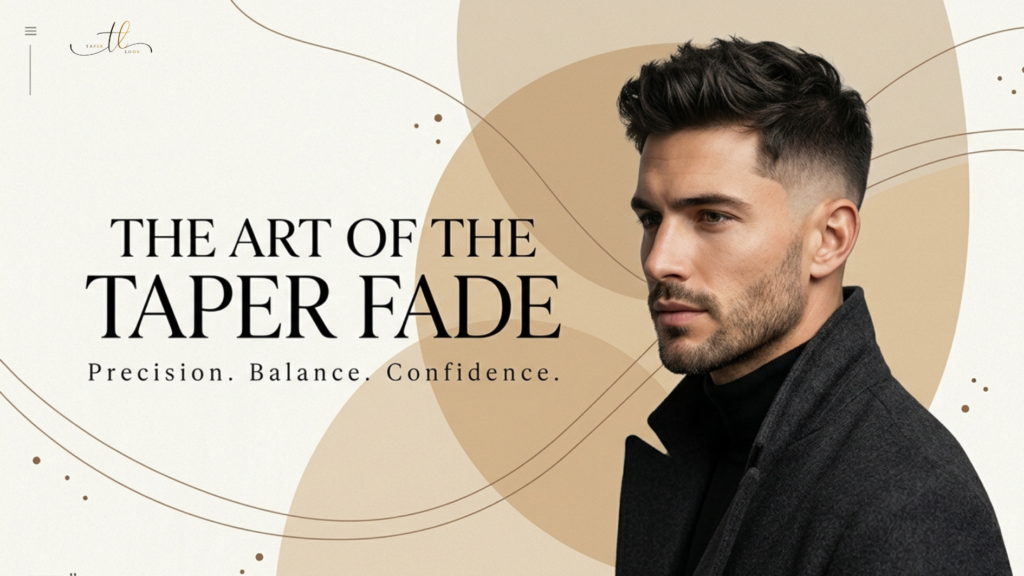
Choosing the right haircut can completely change your appearance and confidence. However, finding a style that looks modern without requiring complicated maintenance can feel challenging. If you want clean edges, smooth blending, and a natural finish, understanding what is a taper fade can help you make the right choice.
A taper fade gradually shortens hair around the temples, sideburns, and neckline while keeping more length above. This popular haircut offers flexibility for different hair textures, face shapes, and personal styles. Whether you prefer a low taper fade, a sharp mid taper, or a bold high taper, knowing the differences matters. This guide explains everything from haircut types and styling options to barber techniques and maintenance tips.
What Is a Taper Fade Haircut?
A taper fade haircut is a hairstyle where hair gradually becomes shorter around the temples, sideburns, and neckline. The longer hair blends smoothly into shorter sections, creating a neat appearance without obvious cutting lines. Unlike a full fade, a taper fade generally concentrates its closest blending around the edges rather than covering the entire sides and back.
Understanding the taper fade meaning becomes easier when you imagine a gradual slope. Hair remains longer toward the upper sides and becomes progressively shorter near the hairline. Your barber uses different clipper lengths to create this transition. Depending on your preference, the shortest sections may retain visible hair or reach nearly bare skin.
One major advantage of this haircut is its versatility. You can combine it with a textured crop, curly hairstyle, pompadour, or traditional side part. A classic taper fade haircut offers a subtle appearance, while modern variations create stronger contrast. Both options can complement casual clothing and professional outfits.
Another reason people choose taper fades is their natural appearance as hair grows. Since much of the surrounding hair remains longer, subtle versions can grow out without dramatic changes. However, sharper variations may need regular touch-ups to maintain their definition.
How Does a Taper Fade Haircut Work?
A taper fade works through a gradual hair length transition between longer and shorter sections. Barbers use clippers, guards, combs, and sometimes scissors to reduce hair length carefully. The shortest areas usually appear around the temples and neckline, while the upper sections retain more volume.
The process begins with a consultation. Your barber examines your hair texture, growth patterns, and preferred hairstyle. Next, they establish the shortest cutting area and gradually blend upward. A successful haircut creates smooth hair blending without visible steps or uneven patches.
The typical cutting process includes these steps:
- Consultation: Choose the taper height, top length, and desired finish.
- Hair preparation: Comb the hair and identify its natural growth direction.
- Initial cutting: Establish the shortest section around the temples and neckline.
- Gradual blending: Connect shorter hair with longer sections using different clipper settings.
- Detailing: Remove visible lines and refine the transition.
- Final styling: Shape the hairline and style the longer sections.
Professional barbers use several taper fade blending techniques to achieve consistent results. For example, a #1 clipper guard generally leaves approximately 3 mm of hair, while a #2 leaves around 6 mm. Guard lengths can vary slightly between clipper systems.
The clipper-over-comb technique also helps blend areas where guards alone cannot create the desired finish. More importantly, a barber adjusts cutting angles and pressure according to your hair density. These details produce a balanced haircut rather than an uneven transition.
Different Types of Taper Fade Haircuts
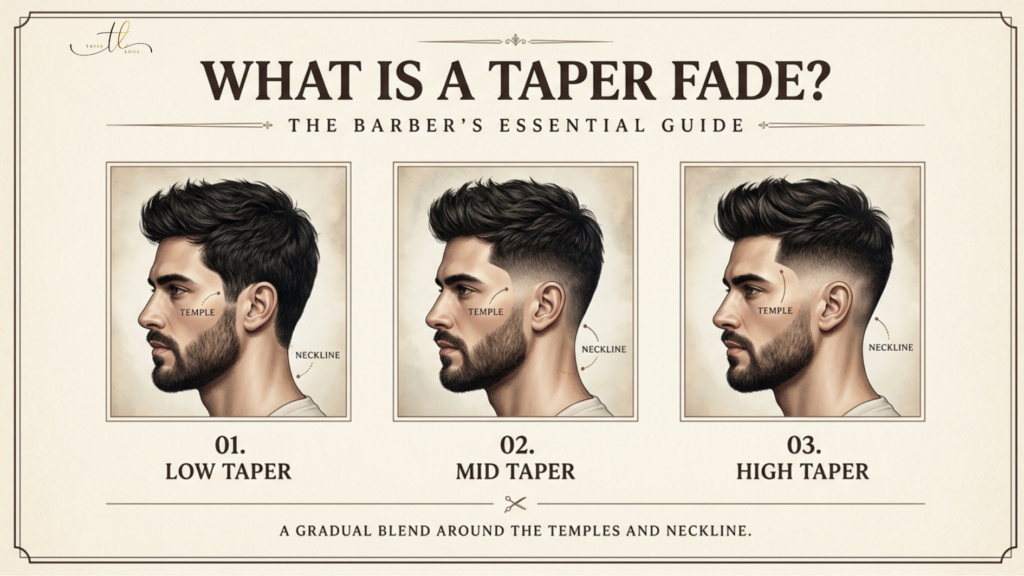
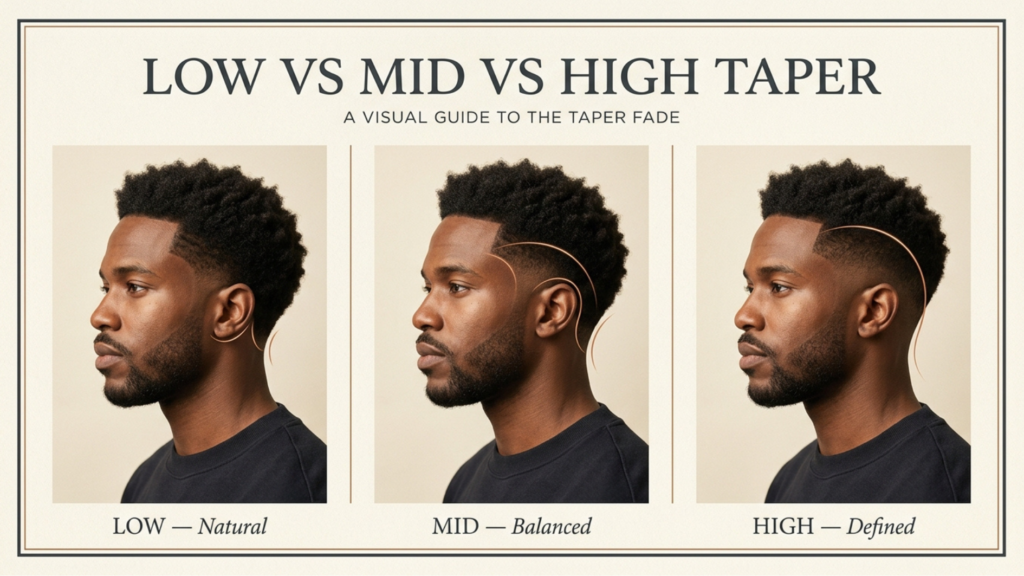
There are several different types of taper fades, each offering a distinct appearance. The main differences involve blending height, contrast, and the amount of hair removed. Understanding these variations helps you choose a style that matches your personality and grooming preferences.
Low Taper Fade
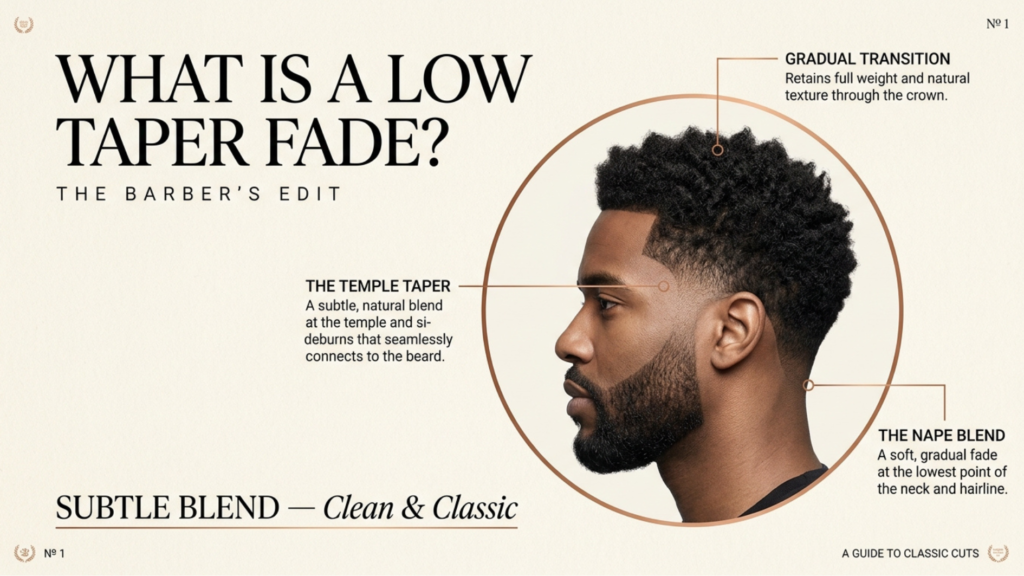
A low taper fade creates subtle blending close to the ears, sideburns, and neckline. Most of the surrounding hair remains longer, giving the haircut a natural appearance. This variation works particularly well for beginners who want a clean look without dramatic changes.
Low tapers complement straight, curly, and wavy hairstyles. They also pair nicely with business haircuts because the blending remains understated. If you prefer a relaxed appearance that grows out gradually, this option deserves consideration.
Mid Taper Fade
A mid taper fade creates a more noticeable transition around the temple area. It offers a balance between the subtle low taper and the stronger high taper. This makes it a versatile choice for many modern hairstyles.
Mid tapers work well with textured crops, quiffs, and medium-length hair. The additional contrast can emphasize the hairstyle on top without making the entire sides extremely short.
High Taper Fade
A high taper fade places the shorter blending higher around the sides. This creates stronger contrast between the upper hair and closely trimmed sections. It suits people who prefer a sharper, more noticeable haircut.
High tapers can complement curly tops, textured hairstyles, and styles with additional height. However, they may require more frequent touch-ups because regrowth can soften the original contrast.
Skin Taper Fade
A skin taper fade reduces the shortest sections to bare skin or nearly zero length. The blending remains concentrated around the temples and neckline, unlike a full skin fade that usually covers larger areas.
This variation creates particularly clean edges. However, it may require regular maintenance to preserve its sharp appearance.
| Taper Type | Blending Height | Appearance | Maintenance |
| Low taper | Near ears and neckline | Subtle and natural | Moderate |
| Mid taper | Around temples | Balanced and modern | Moderate |
| High taper | Higher around sides | Bold and defined | More frequent |
| Skin taper | Varies by height | Sharp and close | More frequent |
Taper Fade vs Regular Taper vs Skin Fade: Key Differences
Many people confuse a taper fade with a traditional taper or full fade. Although these haircuts share similar blending techniques, their cutting areas and finished appearances differ. Understanding taper fade vs fade terminology helps you communicate clearly with your barber.
A regular taper gradually shortens the hair while generally preserving visible length near the edges. A taper fade uses closer blending around the temples and neckline. Meanwhile, a full fade usually extends across larger portions of the sides and back.
The distinction between taper fade vs skin fade involves both cutting placement and shortest hair length. A skin fade reaches bare skin, creating stronger contrast. A taper fade can also reach skin level, but its closest blending typically remains localized.
| Feature | Regular Taper | Taper Fade | Skin Fade |
| Cutting area | Gradual reduction around sides | Mainly temples and neckline | Larger side and back sections |
| Shortest length | Usually visible hair | Hair or skin | Bare skin |
| Contrast | Subtle | Adjustable | Usually stronger |
| Overall appearance | Traditional | Modern and versatile | Sharp and bold |
| Grow-out | Generally gradual | Depends on variation | Contrast changes quickly |
If you prefer a professional appearance with minimal contrast, consider a regular taper or low taper fade. However, a full skin fade may suit you better when you want closely shaved sides.
Neither haircut is universally better. Your preferred appearance, hair texture, and maintenance routine should guide your decision.
Best Taper Fade Hairstyles for Different Hair Types
The best taper fade hairstyles complement your natural hair texture rather than forcing it into an unsuitable shape. Straight, wavy, curly, and coily hair respond differently to blending techniques. Therefore, choosing the right combination improves both appearance and daily styling.
A taper fade with straight hair produces clean, visible transitions because individual cutting lines remain easy to notice. You can pair this style with a side part, textured fringe, or slicked-back hairstyle. Matte clay adds definition, while lightweight pomade creates a smoother finish.
A taper fade with wavy hair highlights natural movement and texture. The shorter edges provide structure without removing the waves above. Sea salt spray or lightweight styling cream can enhance movement while preventing excessive product buildup.
For naturally curly hair, a taper fade with curly hair keeps the sides neat while preserving volume on top. Your barber should consider curl shrinkage before cutting because curls may appear shorter after drying. Curl cream can help maintain definition and reduce unwanted frizz.
Coily hair also pairs well with tapered edges. The contrast between a shaped top and closely blended temples creates a distinctive silhouette. Moisturizing products help maintain softness, while gentle detangling protects the natural texture.
You can also combine taper fades with popular hairstyles:
- Textured crop: Short layers create movement and require minimal styling.
- Quiff: Longer front hair adds height and a modern appearance.
- Pompadour: Hair sweeps upward and backward for a fuller silhouette.
- Side part: A traditional hairstyle with clean, tapered edges.
- Slick back: Longer hair creates a smooth, polished finish.
A taper fade with beard offers another attractive combination. Your barber can blend the sideburns into facial hair, creating a connected appearance. This works with short stubble, medium beards, and fuller beard styles.
How to Choose the Right Taper Fade for Your Face Shape
Your face shape influences how different taper fades appear. Choosing the right blending height can visually balance facial proportions and highlight your preferred features. However, hair density, forehead shape, and personal preference also matter.
A taper fade for round face often works well with additional height on top. A mid or high taper can create stronger vertical emphasis, making the face appear slightly longer. A textured quiff or short pompadour can enhance this effect.
A taper fade for oval face offers considerable flexibility because oval proportions suit many hairstyle combinations. You can experiment with low, mid, or high tapers depending on your preferred appearance.
For square faces, a taper fade for square face can complement a strong jawline. Low and mid tapers preserve some side volume, while textured layers soften the overall silhouette.
People with longer faces may prefer lower tapers that maintain width around the sides. Extremely high hairstyles can emphasize facial length, although personal styling preferences should always come first.
| Face Shape | Suggested Taper | Styling Recommendation |
| Round | Mid or high | Add height on top |
| Oval | Low, mid, or high | Experiment with different styles |
| Square | Low or mid | Try textured layers |
| Oblong | Low | Maintain some side volume |
| Heart | Low or mid | Consider a textured fringe |
| Diamond | Low or mid | Balance cheekbones with suitable volume |
These suggestions provide a useful starting point rather than strict haircut rules. A skilled barber can adjust the taper to complement your individual features.
How to Ask Your Barber for a Taper Fade
Knowing how to ask for a taper fade helps prevent disappointing haircut results. Simply requesting a fade leaves important details unclear. Your barber needs to understand the blending height, preferred hair length, and desired overall appearance.
Start by explaining whether you want a low, mid, or high taper. Next, describe how much hair you want to keep on top. Mention whether you prefer a natural neckline, sharp edges, or a skin-level finish.
You could say:
“I’d like a low taper fade around my temples and neckline. Please keep about two inches on top, add some texture, and blend the sides smoothly without taking the fade too high.”
This simple description provides useful direction. Bringing haircut reference photos can also help because barbershop terminology sometimes varies.
Another important consideration involves your daily routine. If you rarely use styling products, request a hairstyle that looks good with minimal effort. Your barber can recommend a suitable top length and texture.
Avoid common mistakes such as choosing a haircut based only on social media photographs. Different hair textures and densities can produce different results. Also, don’t request extremely short blending without understanding how much scalp may become visible.
A professional consultation allows you to discuss these details before cutting begins. Clear communication usually produces better results than leaving every decision to the barber.
How to Maintain and Style a Taper Fade Haircut
Proper taper fade haircut maintenance helps your hairstyle remain neat between barber appointments. Although taper fades grow out naturally, the sharpness around the temples and neckline gradually becomes less noticeable.
Many people schedule haircut touch-ups every two to four weeks. However, the ideal interval depends on your hair growth rate, taper height, and preferred appearance. Low tapers may remain visually tidy longer, while skin-level variations often show regrowth sooner.
If you’re wondering how long does a taper fade last, remember that the haircut doesn’t suddenly disappear. Instead, its original shape gradually softens as hair grows. Regular edge cleanups can extend the neat appearance without requiring a complete haircut.
Daily care also matters. Wash your hair according to your scalp needs and use conditioner when appropriate. Avoid applying excessive styling products because buildup can make hair look heavy.
Choose products based on your hairstyle:
- Matte clay: Adds texture and control to short hairstyles.
- Pomade: Creates a smooth finish for slicked-back styles.
- Curl cream: Supports natural curl definition.
- Lightweight mousse: Adds volume without excessive weight.
- Sea salt spray: Enhances natural movement in suitable hair types.
Avoid trimming the fade yourself unless you understand clipper techniques. Removing too much hair can create uneven patches that become difficult to correct.
Instead, maintain a simple haircut maintenance routine and schedule professional touch-ups when necessary.
Benefits, Drawbacks, and Cost of a Taper Fade
A taper fade offers several advantages for people who want a clean, versatile hairstyle. Its gradual blending creates a neat outline without requiring the entire sides to be shaved closely. This makes it suitable for casual settings, workplaces, and formal occasions.
Another benefit is flexibility. You can combine tapered edges with short crops, longer hairstyles, curls, waves, or facial hair. A low-maintenance hairstyle becomes possible when you choose a subtle taper and manageable top length.
Taper fades also provide customization. Your barber can adjust blending height, contrast, and neckline shape according to your preferences. This allows the haircut to complement different hair textures and facial proportions.
However, there are some drawbacks. Sharper tapers may require frequent maintenance, especially when the shortest sections reach bare skin. Detailed blending also depends on barber skill, so uneven cutting can affect the finished appearance.
Haircut costs vary according to location, barber experience, shop pricing, and additional services. Some barbers include taper fades within standard haircut prices, while others charge extra for detailed blending or skin-level finishes.
Before booking, ask whether the quoted price includes beard trimming, hair washing, or styling. Understanding the total cost helps you avoid unexpected charges.
If you prefer minimal upkeep, a traditional taper may suit you better. Meanwhile, a full fade offers stronger contrast for people who enjoy closely trimmed sides.
Frequently Asked Questions
What is the difference between a taper and a fade?
A taper gradually shortens hair while usually leaving visible length near the edges. A fade often creates a closer transition across larger areas. A taper fade combines these techniques around the temples and neckline.
Is a taper fade good for all hair types?
Yes, taper fades work with straight, wavy, curly, and coily hair. However, barbers adjust blending techniques according to hair texture, density, and growth patterns.
How long does a taper fade last?
A taper fade often maintains a neat appearance for approximately two to four weeks. The exact interval depends on hair growth, taper height, and your preferred level of sharpness.
Does a taper fade look professional?
Yes, especially when you choose a low taper with a neatly styled top. Its clean edges and subtle blending make it suitable for many professional environments.
What is the most popular taper fade?
Low and mid taper fades are commonly requested variations. The low taper offers a subtle appearance, while the mid taper provides more noticeable contrast. Popularity varies between locations and personal preferences.
Conclusion
Understanding what is a taper fade makes choosing your next haircut much easier. This versatile hairstyle creates a smooth transition around the temples and neckline while allowing different lengths and textures on top.
A low taper provides a subtle appearance, a mid taper offers balanced contrast, and a high taper creates a bolder finish. Each variation can look excellent when customized to your hair texture and personal style.
Before visiting your barber, choose a reference photograph, consider your maintenance routine, and explain your preferences clearly. The right taper fade should complement your natural features, fit your lifestyle, and remain comfortable as your hair grows.

Welcome to TaperLook! I’m Habib, a dedicated content writer with 1.5 year of experience in SEO, digital content, and website growth. I specialize in creating engaging, reader-friendly, and search-optimized content that helps websites reach a wider audience and strengthen their online presence.