
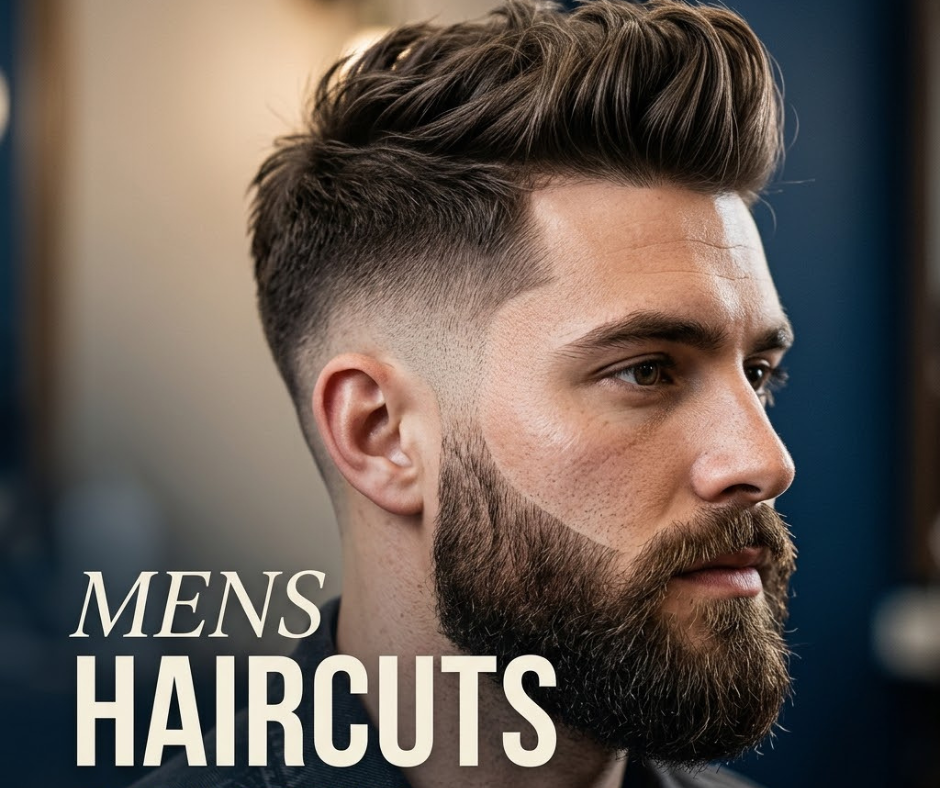
The right haircut can improve your appearance, complement your face shape, and make your daily grooming routine easier. The best mens haircuts range from classic buzz cuts and crew cuts to modern fades, textured crops, and longer hairstyles. In 2026, men have plenty of options for different hair textures, personal styles, and lifestyles. However, choosing a trending haircut is only the first step.
You also need to consider how it suits your hairline, how much styling it requires, and how often you want to visit your barber. This guide explores 12 popular styles and explains how to choose, style, and maintain the right haircut for you.
What Are the Most Popular Mens Haircuts in 2026?
Mens haircuts offer different combinations of length, texture, shape, and contrast. Some men prefer short, low-maintenance styles, while others enjoy hairstyles with volume and movement. Buzz cuts, crew cuts, textured crops, low tapers, and side parts remain useful options because barbers can adapt them to different preferences. Meanwhile, modern mullets, undercuts, and pompadours offer more distinctive looks.
The best choice depends on your hair texture, face shape, hair density, and daily routine. For example, a textured crop can work well if you want a stylish cut that requires little effort. A pompadour may suit you better if you enjoy creating volume and shaping your hair each morning. When exploring mens hairstyles 2026, focus on styles that complement your natural features instead of following every trend. A good haircut should look attractive and remain manageable after you leave the barbershop.
12 Best Mens Haircuts and Trending Hairstyles to Try in 2026
The following best mens haircuts include classic choices, modern styles, and versatile options for different hair types. Each haircut offers a different appearance, so consider your preferred length and maintenance requirements before making a decision.
Buzz Cut
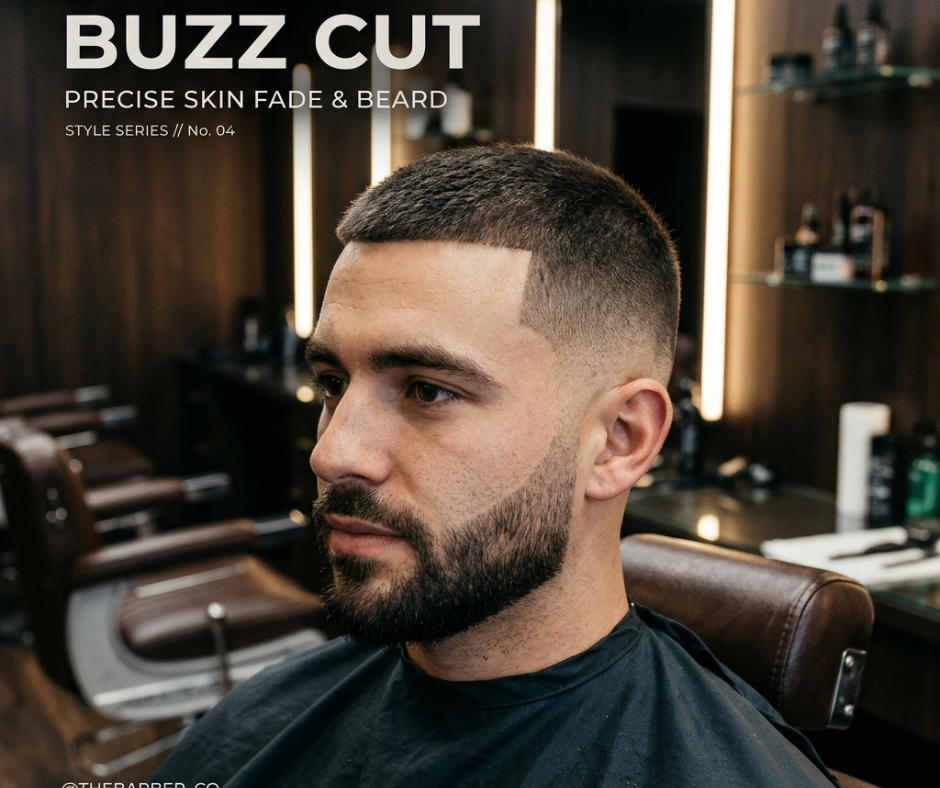
The buzz cut is one of the simplest short haircuts for men. Barbers use electric clippers to cut the hair to a short, relatively even length. This creates a clean appearance without requiring much daily styling. You can choose an extremely short finish or leave slightly more length for a softer look. Although the buzz cut is easy to manage, regular trims help maintain its shape.
Crew Cut
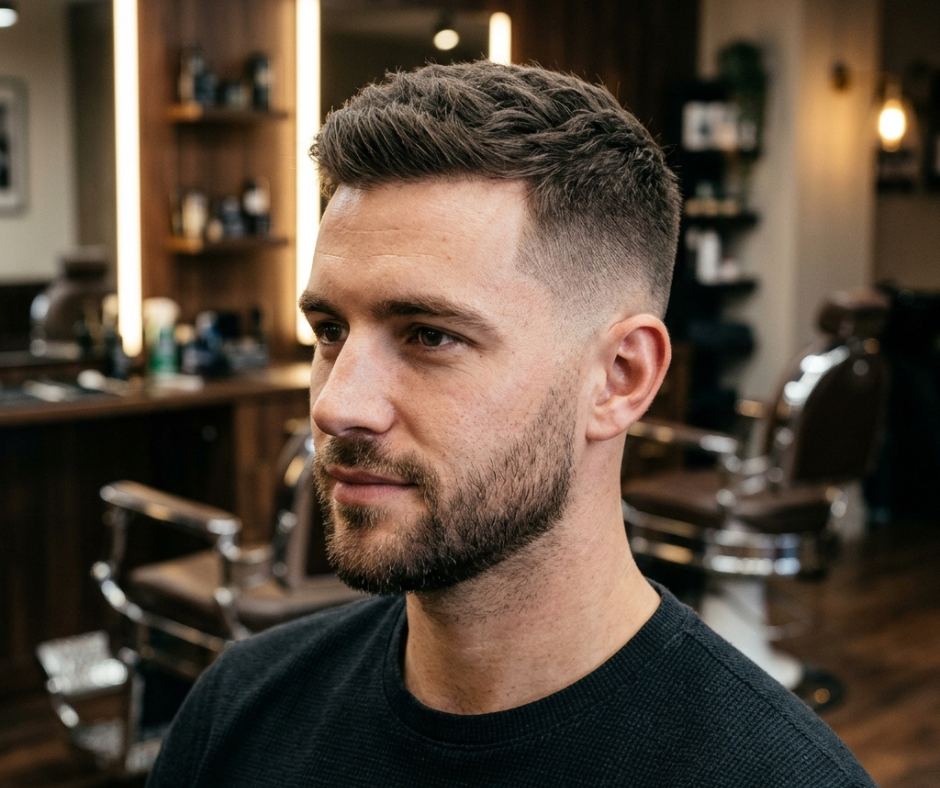
The crew cut features short sides and a slightly longer top. It offers a neat, practical appearance that works for casual occasions and professional environments. You can wear it naturally or apply a small amount of styling product for additional texture. This haircut suits men who want something more structured than a buzz cut without dealing with complicated styling routines.
Textured Crop
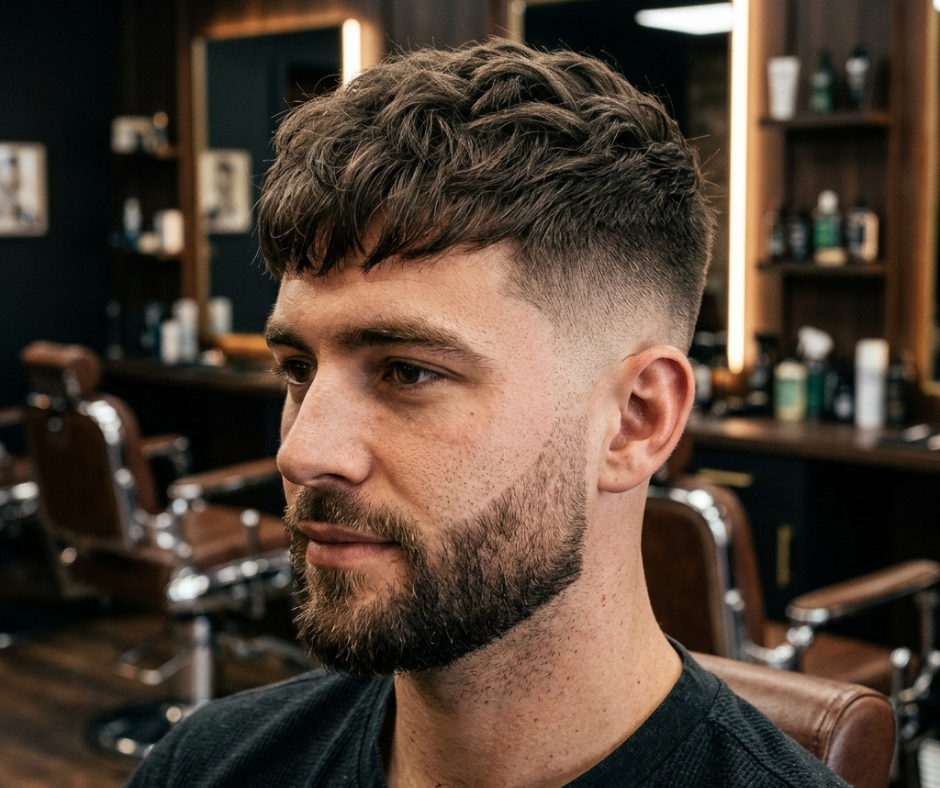
The textured crop haircut combines short sides with a top that features movement and separation. Barbers often use point cutting to create texture and prevent the hair from looking too uniform. A short fringe can complete the look, giving the haircut a contemporary finish. Matte clay can help define the texture without creating excessive shine.
French Crop
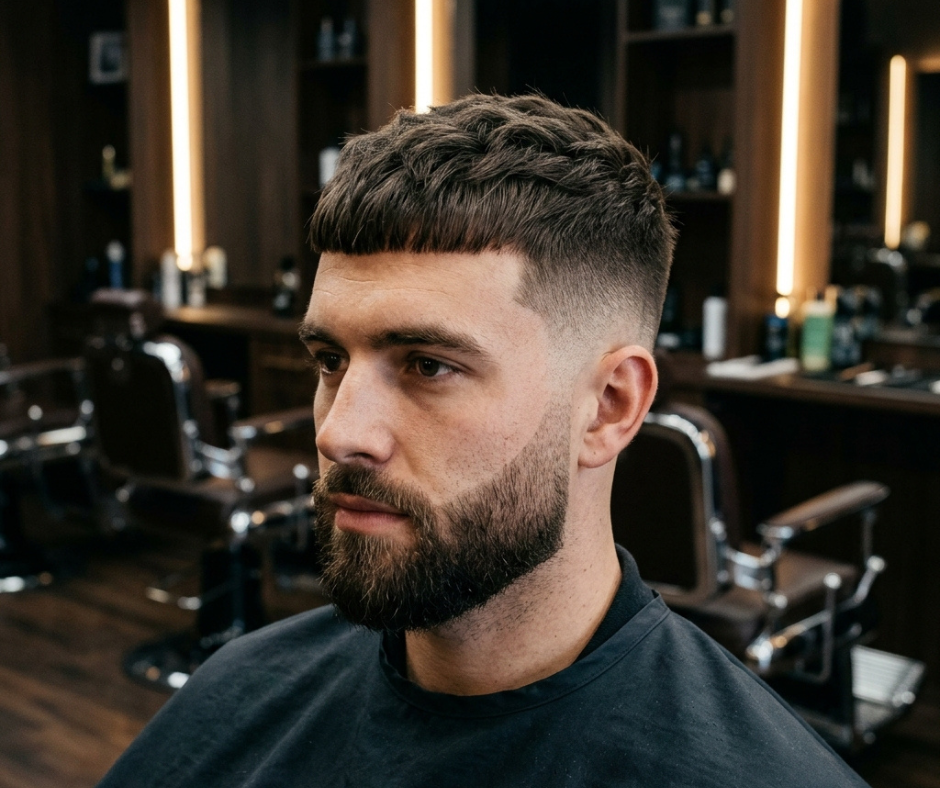
The French crop features short sides and hair brushed forward into a fringe. The front can look blunt, softly textured, or slightly uneven, depending on your preference. This haircut works well if you want a simple style that does not require much daily shaping. Your barber can adjust the fringe to suit your forehead, hairline, and natural hair growth.
Low Taper Fade
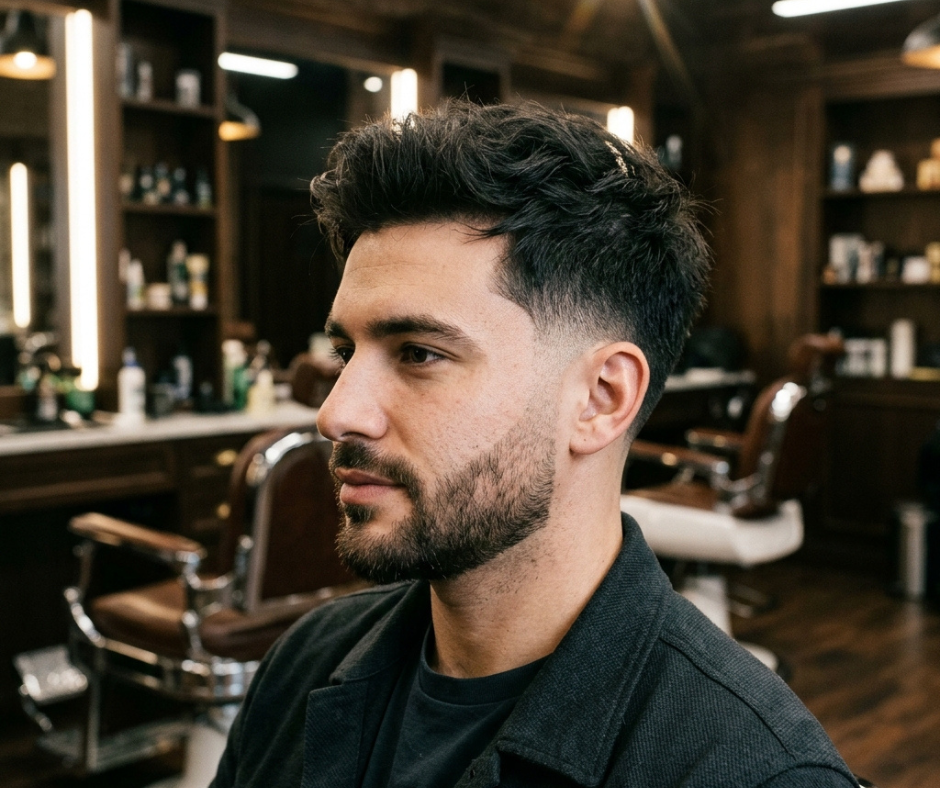
A low taper fade gradually shortens the hair around the temples and neckline. It creates a clean outline while preserving more length around the sides than some higher fades. You can combine it with curls, a side part, a textured top, or a short quiff. It is a useful option if you want a polished appearance without an overly dramatic contrast.
Mid Fade Haircut
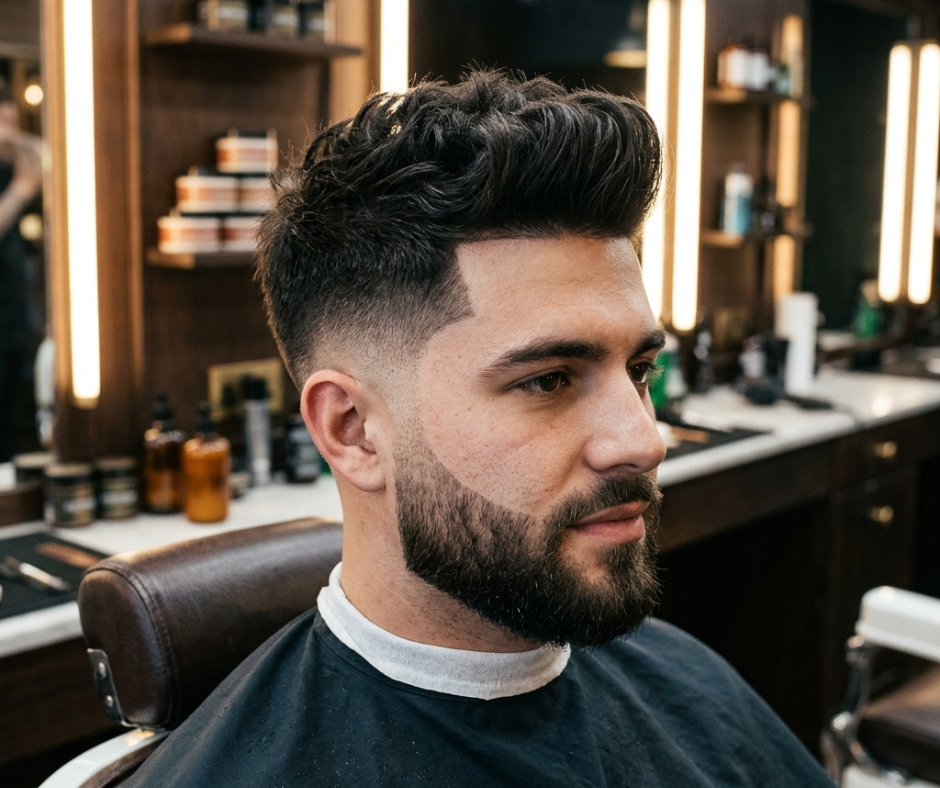
The mid fade haircut begins around the middle of the sides and gradually blends into shorter hair. It creates a balanced appearance between a subtle low fade and a more noticeable high fade. Mid fades work with many hairstyles, including textured crops, curls, and quiffs. Ask your barber to adjust the fade height and top length according to your preferred look.
High Fade Haircut
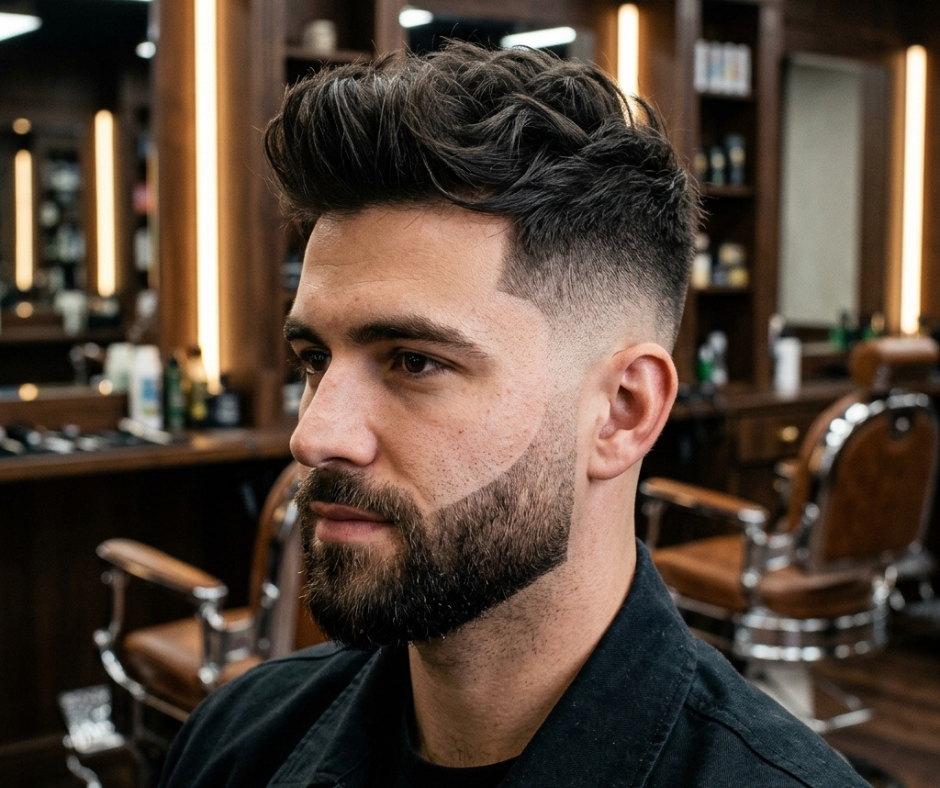
A high fade begins higher on the sides, creating a stronger contrast between the top and the shorter hair below. This makes it suitable for men who prefer sharp, modern styles. You can pair it with short textured hair or a longer top for added definition. Because the sides are cut higher, regrowth may become noticeable sooner than with a softer taper.
Skin Fade
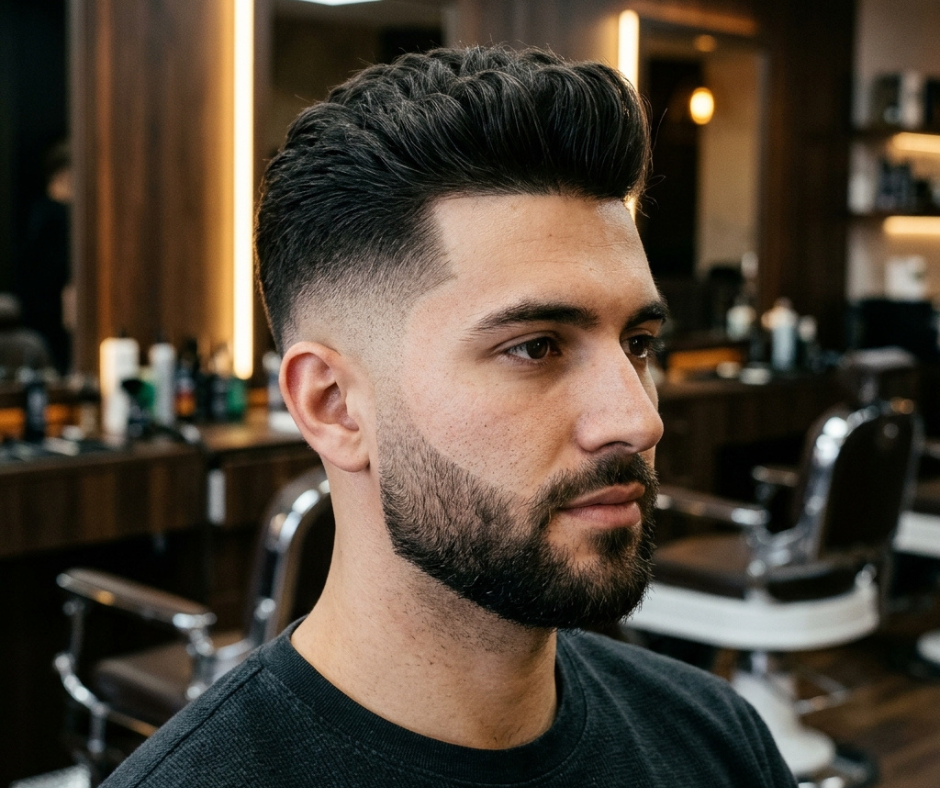
A skin fade haircut blends the hair down to bare skin at its shortest point. It can be combined with a low, mid, or high fade, depending on where the transition begins. The result often looks sharp and well-defined. However, maintaining that clean finish usually requires regular touch-ups, and men with sensitive skin should discuss their shaving preferences with their barber.
Pompadour
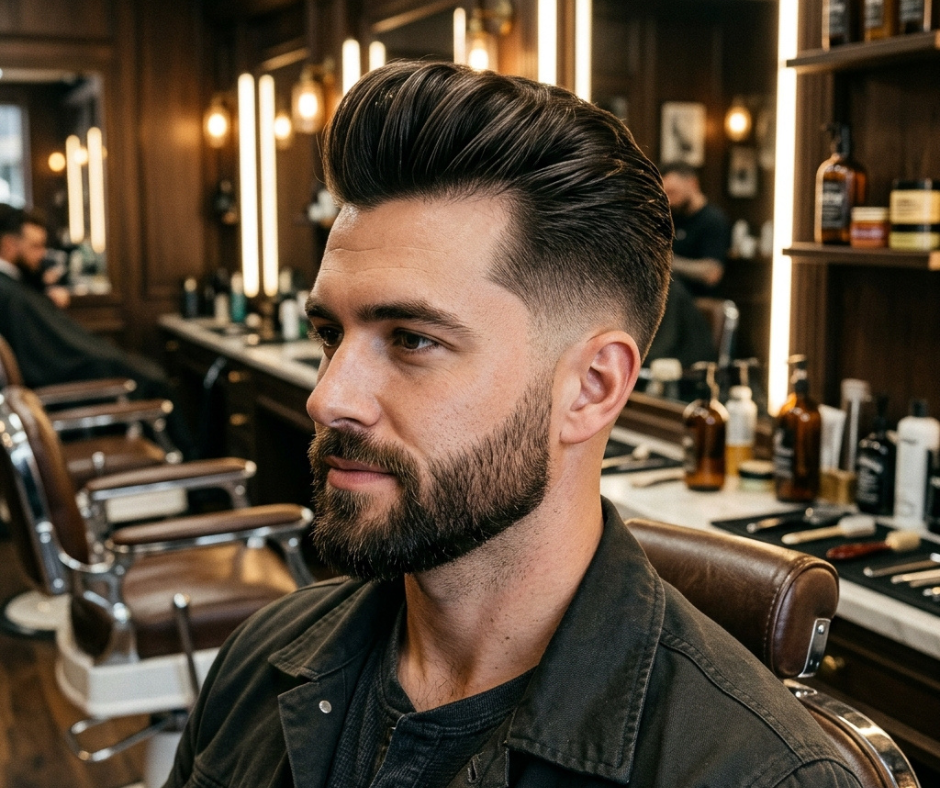
The pompadour features volume at the front, with the hair swept upward and backward. Modern versions often combine a fuller top with tapered or faded sides. This hairstyle can create a distinctive appearance, but it usually requires more effort than a crop or crew cut. A blow-dryer and a suitable styling product can help you create volume and maintain the shape.
Side Part
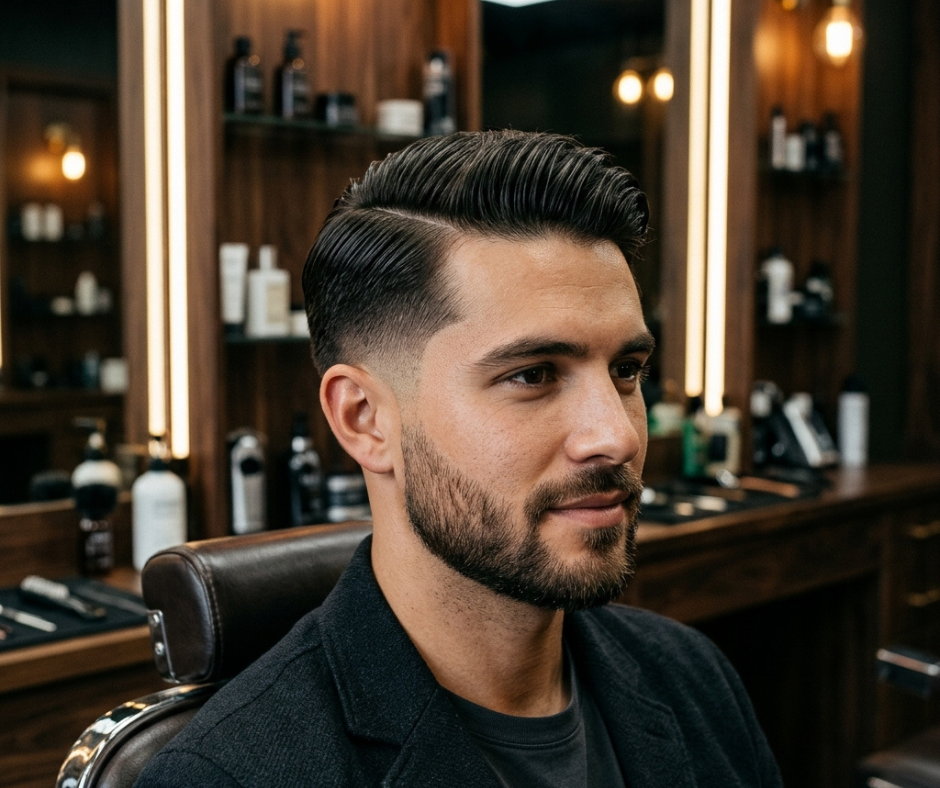
The side part haircut divides the hair into two sections using a natural or defined parting. It offers a classic, polished appearance that works well in professional and formal settings. You can keep the sides neatly tapered or add a subtle fade for a modern finish. Pomade creates a smoother appearance, while styling cream provides a softer, more natural result.
Undercut
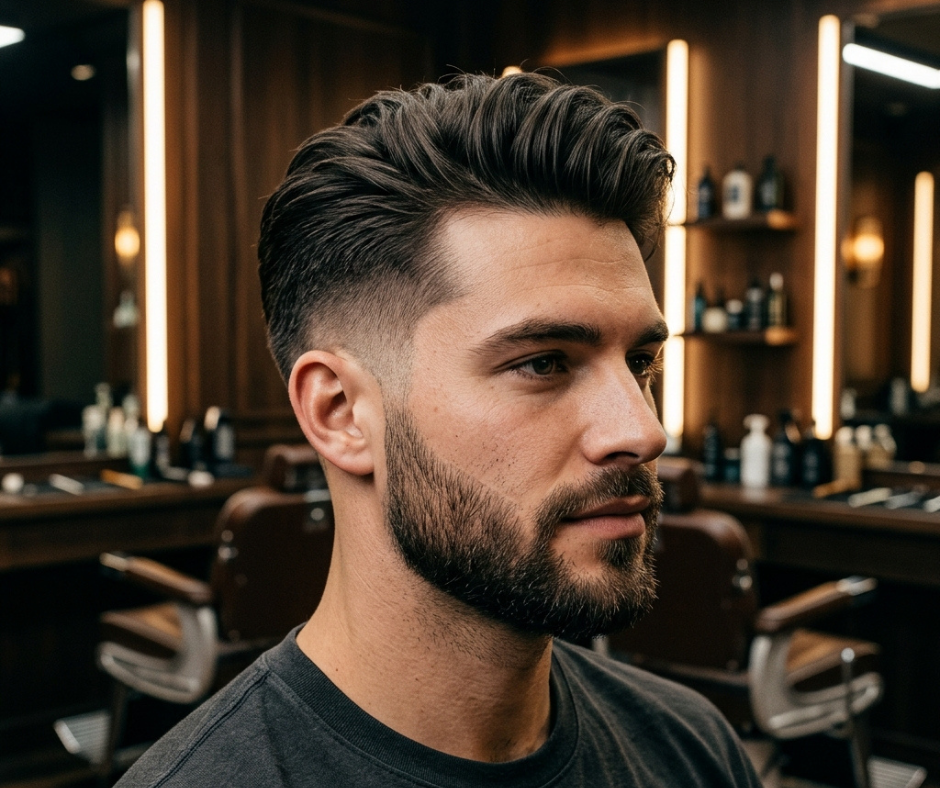
The undercut features noticeably shorter sides and back with longer hair on top. Some versions use a clear separation between the two lengths, creating a disconnected appearance. Others incorporate a softer transition. You can style the top backward, sweep it sideways, or leave it textured. This haircut suits men who want contrast and flexibility, although longer tops may require daily styling.
Modern Mullet
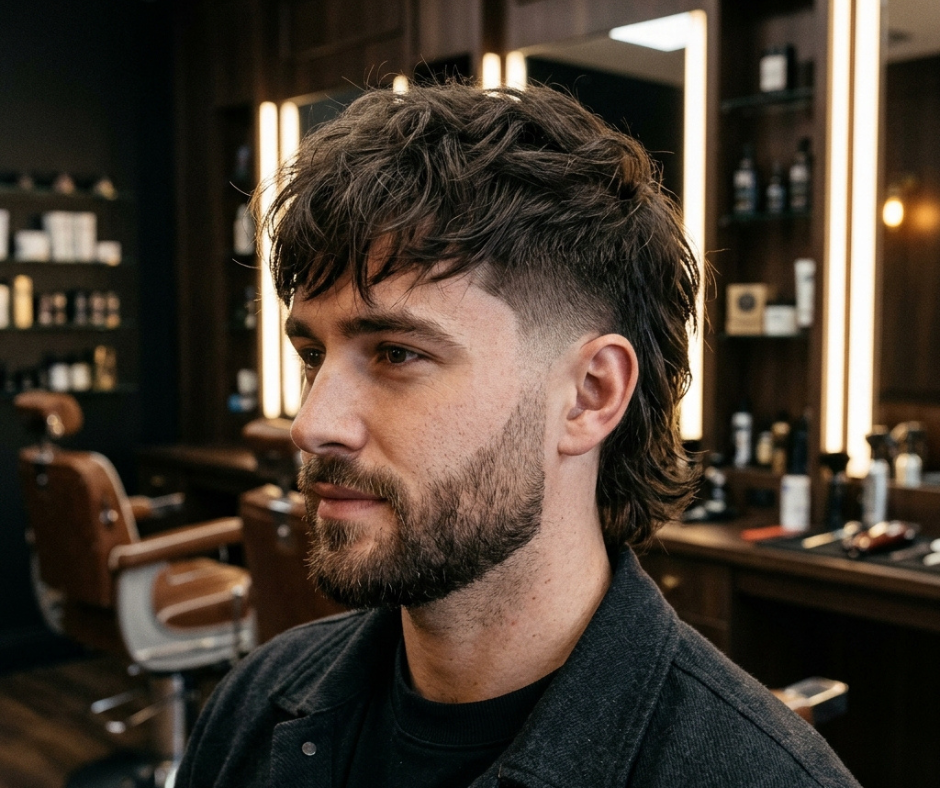
The modern mullet keeps the front and sides relatively short while leaving additional length at the back. Contemporary versions often use layers and texture to create a more balanced appearance. A short mullet is a practical option if you want a distinctive hairstyle without growing your hair very long. Discuss the back length and side shape with your barber to avoid an overly dramatic result.
Different Types of Mens Haircuts Explained
Understanding basic barber terminology helps you describe the haircut you want. A fade gradually reduces the hair length along the sides and back, sometimes reaching the skin. A taper usually focuses on the temples and neckline, leaving more hair around the rest of the head. A scissor cut creates a softer shape and gives the barber more control over length and texture.
Classic mens hairstyles, such as crew cuts and side parts, remain versatile because they can be adjusted to different hair types. Modern mens haircuts often introduce textured tops, sharper fades, layered shapes, or stronger contrasts. For example, a traditional side part can look contemporary with a subtle fade, while a textured crop can appear more relaxed with a natural fringe.
| Haircut type | Main feature | Best for |
| Fade | Gradual shortening along the sides | Defined, modern styles |
| Taper | Shorter temples and neckline | Subtle, versatile looks |
| Textured cut | Separated lengths and movement | Relaxed, natural styling |
| Layered cut | Different lengths throughout the hair | Reducing bulk and adding shape |
| Undercut | Strong contrast between top and sides | Bold, distinctive styles |
| Scissor cut | Shape created mainly with scissors | Natural finishes and controlled length |
Best Mens Haircuts for Every Face Shape
Your face shape can help you choose a haircut that creates the appearance you prefer. However, it should not restrict your options. Hair texture, hairline, personal taste, and styling habits also influence the final result.
Men with oval faces can usually experiment with many styles, including crew cuts, textured crops, and side parts. For round faces, adding height on top while keeping the sides shorter may create a more elongated appearance. A textured quiff or suitable fade can help achieve this effect.
Square faces often feature a strong jawline and a broad forehead. Crew cuts, short fades, and textured hairstyles can complement these proportions. If you prefer a softer appearance, ask your barber to avoid excessively sharp lines. For heart-shaped faces, side-swept styles and medium-length hair can help balance a wider forehead with a narrower chin.
Men with long or oblong faces may prefer hairstyles that add width rather than excessive height. A textured fringe or side part can be worth considering. Before deciding, discuss your face shape and hairline with your barber. The goal is to choose a style that suits your overall appearance, not to follow a strict set of rules.
Best Mens Haircuts for Different Hair Types and Textures
Your hair texture affects how a haircut falls, how much volume it creates, and how easily you can style it. A style that looks excellent on straight hair may require adjustments for curls or waves. Tell your barber how your hair behaves naturally, especially if you usually let it air-dry.
Straight hair often works well with side parts, French crops, crew cuts, and undercuts. If your hair tends to lie flat, a textured top can add movement. Wavy hair suits layered styles, relaxed quiffs, and tapers that preserve natural movement. A small amount of sea salt spray may help define waves without making the hair feel heavy.
Curly hair can look excellent with tapered sides, textured tops, and fades. However, the barber should account for curl shrinkage because curly hair often appears shorter when dry. Thick hair may need layering or point cutting to reduce excess bulk. Fine or thinning hair may benefit from shorter, structured styles, such as crew cuts and textured crops, that create a balanced silhouette.
Consider your hair density and crown area when choosing a style. If you have thinning hair, explain which areas you want to minimize or leave uncovered. Your barber can adjust the top length and shape to work with your existing hair rather than forcing a style that requires more volume than you have.
Low Fade vs. Mid Fade vs. High Fade: What’s the Difference?
The main difference between low, mid, and high fades is where the gradual transition begins. A low fade starts near the ears and neckline, creating a subtle finish. A mid fade begins around the middle of the sides and offers balanced contrast. A high fade starts closer to the upper sides of the head, producing a sharper and more noticeable look.
A skin fade describes how short the hair becomes, rather than where the fade starts. You can therefore request a low skin fade, mid skin fade, or high skin fade. A taper is different because it usually focuses on the temples and neckline instead of creating a full transition across the sides.
| Feature | Low fade | Mid fade | High fade |
| Placement | Lower sides | Middle sides | Upper sides |
| Appearance | Subtle | Balanced | Bold |
| Contrast | Usually softer | Moderate | More noticeable |
| Styling options | Curls, side parts, crops | Quiffs, crops, textured tops | Short tops and high-contrast styles |
Choose a low fade if you prefer a softer appearance, a mid fade if you want balance, or a high fade for stronger contrast. Explain your preferred finish before the barber begins cutting. This prevents confusion about how high the fade should sit.
Best Short, Medium, and Long Haircuts for Men
Hair length influences both styling flexibility and maintenance. Short hair is often easier to arrange each morning, while medium and long hair offer more opportunities to change your appearance. Your ideal length depends on your personal style, hair texture, and the amount of time you want to spend grooming.
Short styles include buzz cuts, crew cuts, and textured crops. These are useful if you prefer a neat shape and minimal daily styling. However, a short fade may still need regular barber visits to maintain its clean outline.
Medium length hairstyles for men include textured quiffs, side-swept styles, pompadours, and layered cuts. This length gives you more styling options without requiring the care associated with very long hair. You may need a blow-dryer or a lightweight product to control volume and maintain the desired shape.
Long hairstyles for men include loose waves, layered cuts, slicked-back styles, and tied-back hair. Longer hair can look distinctive, but it needs regular washing, conditioning, and careful detangling. Ask your barber to shape the hair while preserving the length you want. Layers can also reduce excess weight and make longer hair easier to manage.
How to Choose the Right Mens Haircut for Your Style and Lifestyle
Start by deciding what you want from your haircut. You might want more volume, a cleaner neckline, less bulk, or a style that requires almost no daily effort. Consider your hair texture, face shape, hairline, and the time you can spend styling it. These details will help you narrow your options before visiting the barber.
Your lifestyle matters, too. Professional haircuts for men often include crew cuts, side parts, and low tapers because they can look neat without appearing overly dramatic. If you prefer a more expressive style, consider a modern mullet, undercut, or textured crop. For a low-maintenance haircut, think about how it will look as it grows, not just how it appears immediately after trimming.
Bring one or two reference photos to your barber appointment. Explain which details you like, including the fade height, top length, fringe, and neckline. You can also mention what you want to avoid. If you are trying a new style, ask for a conservative version first. It is easier to remove additional length later than to wait for cut hair to grow back.
How to Style and Maintain Mens Haircuts
Choosing the right styling product can make your haircut easier to manage. Matte clay works well for textured styles, while pomade can provide a smoother finish for side parts and slicked-back hair. Hair cream offers softer control, and texture powder can add grip to hair that lacks volume. Sea salt spray may enhance natural waves, although excessive use can leave some hair feeling dry.
Start with a small amount of product and add more only when necessary. Spread it evenly through your hair to avoid heavy or greasy patches. If you use a blow-dryer, choose a comfortable heat setting and direct the hair into the shape you want. You do not need multiple products to create a good result; one suitable product is often enough.
Maintenance depends on the haircut and how quickly your hair grows. Short fades and buzz cuts often need more frequent trims to preserve their shape. Medium and longer styles may remain manageable for longer between appointments. Wash and condition your hair according to its needs, avoid aggressive brushing, and follow a routine that keeps your scalp comfortable.
Frequently Asked Questions
What are the most popular mens haircuts in 2026?
Textured crops, crew cuts, low tapers, mid fades, side parts, pompadours, and modern mullets are useful styles to consider. Choose one that suits your hair and preferred maintenance level.
Which men’s haircut is easiest to maintain?
A buzz cut or simple crew cut is often easy to style. However, very short fades may require regular touch-ups to keep their outlines sharp.
Which haircut suits a round face?
Styles with some height on top and shorter sides can create a more elongated appearance. Textured quiffs and side parts are worth considering.
What are the best haircuts for thinning hair?
Crew cuts, buzz cuts, and textured crops can work well with thinning hair. The best choice depends on your hairline, crown area, and preferred coverage.
How often should men get a haircut?
It depends on your style and how quickly your hair grows. Short fades generally need more frequent maintenance than longer, layered hairstyles.
Conclusion
The best mens haircuts combine personal style, suitable proportions, and practical maintenance. Buzz cuts and crew cuts offer simplicity, while textured crops, fades, side parts, and pompadours provide different levels of definition. Longer styles and modern mullets allow more room for experimentation.
Before choosing a haircut, consider your face shape, hair texture, lifestyle, and preferred styling routine. Bring reference photos to your barber and explain the details that matter most. Ultimately, the right haircut is the one that complements your features, feels comfortable, and fits your everyday life.

Welcome to TaperLook! I’m Habib, a dedicated content writer with 1.5 year of experience in SEO, digital content, and website growth. I specialize in creating engaging, reader-friendly, and search-optimized content that helps websites reach a wider audience and strengthen their online presence.

Pingback: 2026 Haircut Trends Men: 12 Best Trending Hairstyles for Men in 2026